
Looking for a soft ground cover that provides a striking contrast to traditional garden plants? This lamb’s ear care guide will show you how easy it is to grow, how fast it spreads, and how to prune, deadhead, and manage it through the seasons.
Lamb’s ear (Stachys byzantina) is a hardy perennial loved for its soft, silvery foliage, but gardeners quickly discover it’s more than just a pretty plant.
It spreads readily, forms a dense groundcover, and needs only occasional maintenance to keep it tidy and well-behaved in the garden.
Keep reading to learn how to grow and care for lamb’s ear in your garden.
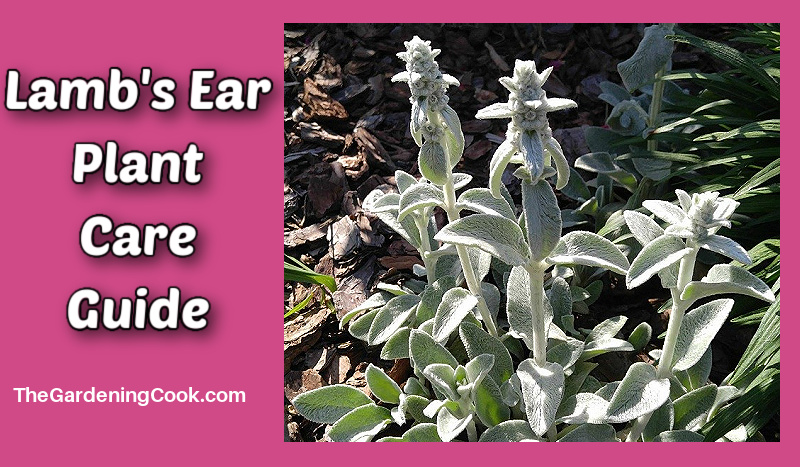
Lamb’s ear plant at a glance
Here is a quick guide to lamb’s ear care:
- Botanical name: Stachys byzantina
- Common name: Lamb’s ear (also rabbit ear plant)
- Plant type: Herbaceous perennial
- Sunlight needs: Full sun to light shade
- Soil: Well-drained, dry to average soil
- Water needs: Low once established
- Height: 6–12 inches tall, up to 18–24 inches when in flower
- Spread: Moderate clumping groundcover
- Bloom time: Late spring to early summer
- Flower color: Soft purple-pink
- Hardiness zones: Typically USDA 4–8
- Special feature: Soft, fuzzy silver-gray foliage
Tips for growing lamb’s ear
Lamb’s ear is a low-maintenance perennial that thrives in the right conditions and quickly establishes itself once planted.
It prefers full sun, well-drained soil, and doesn’t require much water once established, making it a popular choice for borders and ground covers in sunny garden areas.
Once it has become established, the plant begins to expand and form clumps. This is why understanding its growth habit becomes important.
Does lamb’s ear spread? (Growth habit & spread)

Lamb’s ear spreads steadily and can form dense ground cover mats over time. It spreads in two main ways:
- By creeping stems that root when they touch the soil
- By self-seeding from its tall flower spikes
Tips for controlling its spread
Even though it is a vigorous spreader, it is not considered invasive and is easy to control.
- Remove flower stalks: Deadhead the tall flower spikes before they go to seed to keep the self-seeding nature of lamb’s ear in check.
- Add physical borders: Use garden edging around your beds to stop the creeping stems from spreading into your lawn area.
- Divide the clumps: Every 2-3 years, divide the clump to keep the center from dying out and manage the size of the plant.
When to plant lamb’s ear

Plant lamb’s ear in the early spring after the last frost in your area.
- Space the plants about 2-3 feet apart so that they will have room to spread.
- Choose a sunny spot with well-draining soil.
- Dig a hole twice the size of the root ball.
- Add compost or other organic matter to the hole.
- Position the crown level with the soil surface.
Sunlight requirements
In my experience, lamb’s ear performs best in a spot that gets full sun for most of the day but has some afternoon shade. I have tested it in several areas of my garden and found that my current location – my test garden, which receives full sun until about 4 pm before being shaded by nearby trees – produces the healthiest growth.

- My test garden gets about 10 hours of sunlight in total
- It receives 4 hours of full sun in the middle of the day
- It also gets 6 hours of partial sun in the morning and afternoon hours
Watering needs
Lamb’s ear is highly drought-tolerant and requires minimal water once it is established.
- Established plants need only 1 inch of water per week.
- Avoid getting too much water on the leaves, especially if you water in the afternoon, since this can damage the foliage.
- I find that I only need to give it extra water when the temperatures are very high for days on end.
- Too much water will result in root rot.
Fun fact: I originally had two clumps of the plant, one on either side of a pathway. The left side got much more standing water and shade than the right side, and the difference in the plants shown in the photo below is astounding.

Winter care and cold hardiness for lamb’s ear
Lamb’s ear requires minimal winter maintenance.
In the fall
- Cut back spent flower stalks at the base level, after your first hard frost.
- Tidy up the crown to give the plant a neat appearance
For winter protection
Lamb’s ear foliage is susceptible to excess moisture over the winter months that can lead to crown rot.
- Add mulch or straw around the base of the plant if you live in regions that get severe freezing.
- Be careful not to mulch over the center of the plant to avoid crown rot.
- Lamb’s ears is cold hardy in zones 4-8.
- The plant can get ragged-looking in the dormant months and will do well with a clean-up in the spring.
Lamb’s ear flowers and foliage
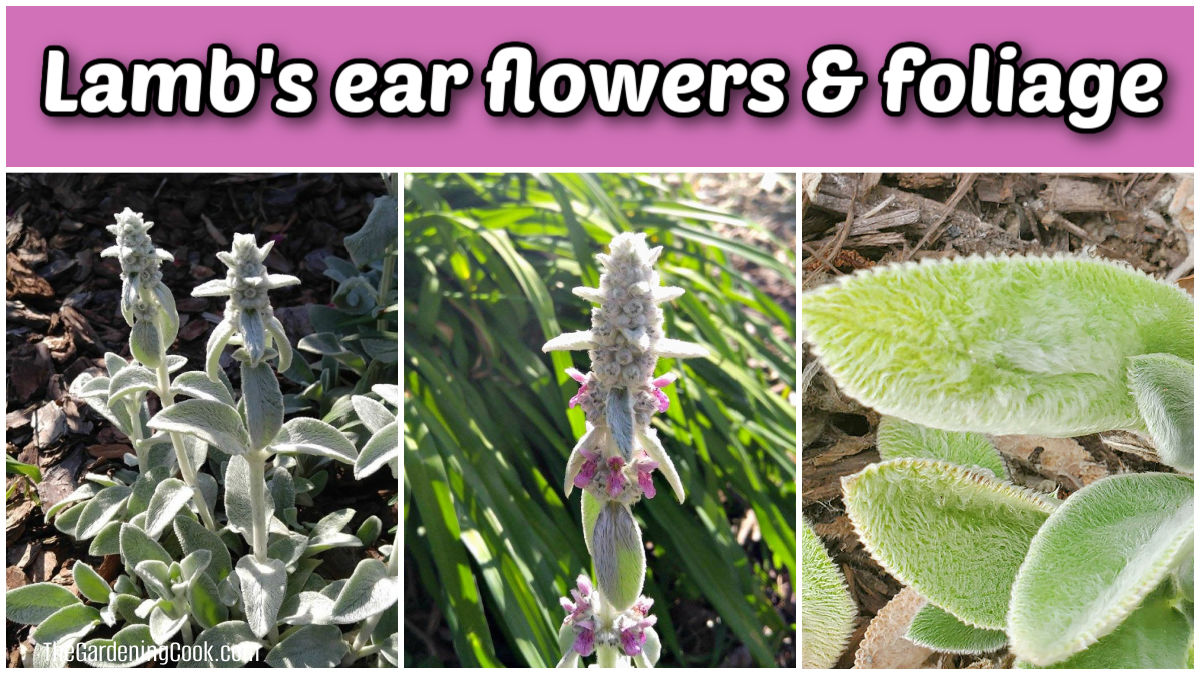
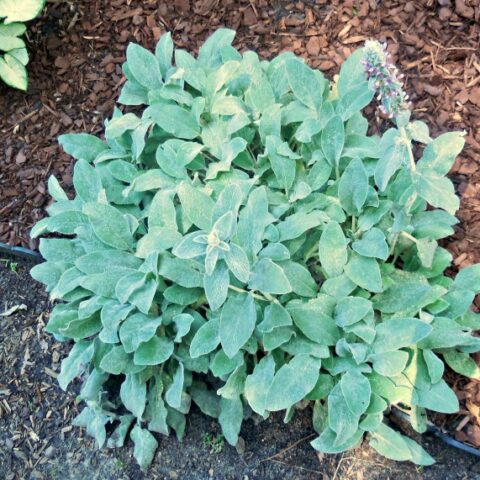
The name lamb’s ears comes from the shape of the leaves and the fuzziness of the coating on them, which resembles the ears of baby lambs.
Lamb’s ear has soft pink flowers that bloom on tall spikes that sit over the soft foliage.
- The plant flowers in late spring to early summer.
- The stems of the flowers are tall and erect and often branched.
- They can grow to 1 1/2 to 3 feet tall and make quite a show when the plant is totally in bloom.
- Cut back any flowering stems close to ground level after they flower to encourage new stems and leaves.
- The flowers start out with pale green blooms on the ends of long stems and gradually open to lilac-pink flowers.

Propagating lamb’s ear

Because lamb’s ear spreads out from the center of the plant, it will leave an ugly-looking dead spot in the middle. Division helps to get it back to looking tidy.
- Every 3 or 4 years, divide the plant in early spring, just as the new growth begins.
- Dig up and separate the root ball into smaller sections.
- Replant them in fresh soil.
- Additionally, you can propagate the plant from stem cuttings.
- Lamb’s ear is also a self-seeding plant.
Lamb’s ear attracts pollinators
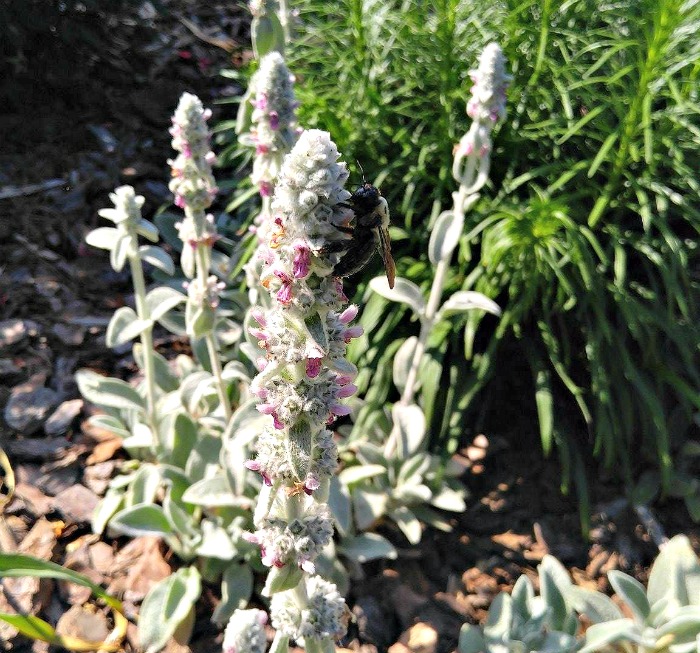
Lamb’s ear is an exceptional plant to include in a pollinator-friendly garden.
- Bees and butterflies flock to it.
- It’s also a great plant to attract hummingbirds to your yard.
Fortunately, it is not popular with deer, rabbits, or squirrels.
Fun fact: Lamb’s ear is most often associated with attracting the wool carder bee, which fiercely defends the flower spikes from other insects! The bees feed on the nectar and collect the soft silver fuzz from the plant’s leaves to weave and line their nests!
Share these tips for how to grow and care for lamb’s ear on X
If you enjoyed learning about lamb’s ear perennial, why not share this guide with a friend?
Wondering if lamb’s ear spreads? 🌿🐑 This soft, silvery perennial is easy to grow, but a few simple care tips can keep it looking its best. Learn about sun needs, spread, deadheading, winter care & more! ✂️☀️🍃 #LambsEar… Share on XPin this lamb’s ear care guide
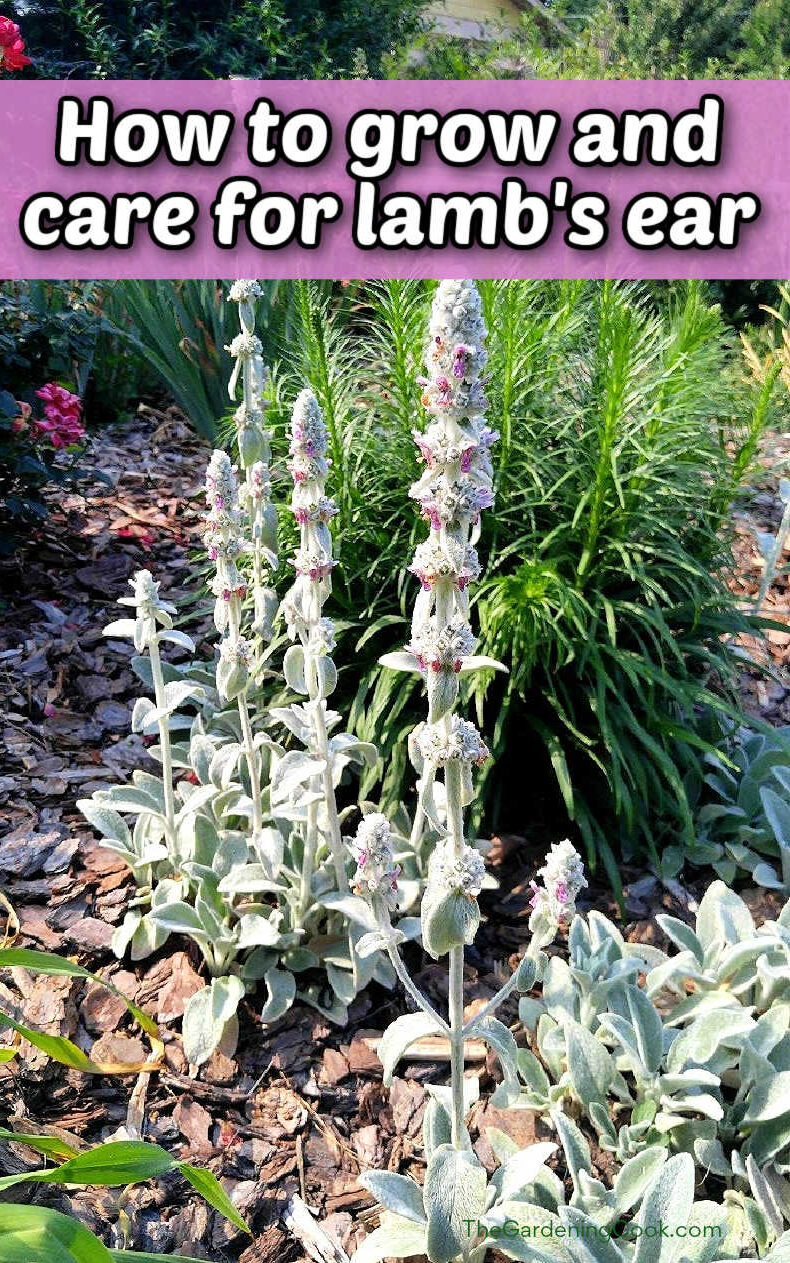
Would you like a reminder of these tips for the care and growing of lamb’s ear perennial? Pin this image to one of your gardening boards on Pinterest so that you can easily find it later.
Admin note: This guide to the care of lamb’s ear first appeared on the blog in May 2017. This post has been updated with new photos, a printable how-to care card, and a slideshow video about other spring-blooming plants.
Lamb’s Ear Care Guide – Spread, Sun & Growing Tips
Learn how to grow lamb’s ear successfully, including sun needs, watering, spread control, deadheading, and seasonal care tips for healthy, soft silvery foliage.
Materials
- 1 lamb's ear perennial
- Organic matter or compost
- Well-draining soil
Tools
- Spade or shovel
- Watering can or h ose
Instructions
- Choose a spot that gets midday sun but morning and afternoon partial sun.
- Place lamb's ear in a sunny garden spot after the last frost.
- Space the plants about 2-3 feet apart so that they will have room to spread.
- Be sure to use well-draining soil.
- Dig a hole twice the size of the root ball.
- Add compost or organic matter to the hole.
- Position the crown level with the soil surface.
- Established plants need only 1 inch of water per week.
- Avoid getting too much water on the leaves, since this can damage the foliage.
- Too much water will result in root rot.
- Cut back spent flower stalks at the base level, in the fall after your first hard frost.
- Add mulch or straw around the base of the plant if you live in regions that get severe freezing.
- Be careful not to mulch over the center of the plant to avoid crown rot.
- Lamb's ears is cold hardy in zones 4-8.
- The plant can get ragged-looking in the dormant months and will do well with a clean-up in the spring.
- Divide every 3-4 years to remove the dead center section.
Recommended Products
As an Amazon Associate and member of other affiliate programs, I earn from qualifying purchases.
-
 Lambsear 1 Live Plant Perennial Lamb's Ear with Roots Ground Cover Purple Flowers
 -
 Lambs Ear Seeds for Planting - Heirloom Wooly Betony - Silvery Perennial Flowering Plants for Shade Gardens, Borders & Drought Tolerant Landscapes
 -
 Homestead Purple Verbena Plant -Perennial Herb -Live Plant -4" Pot. Temp Sensitive. Order When Your Weather mild, not Too hot, not Too Cold (1)
ash
Sunday 5th of April 2020
I have a pretty shallow sealed cement planter (circular; about 4 inches deep and 8 inches in diameter) and I'm looking for something to plant there. Is it possible that I could transplant some Lamb's Ear from my garden and pot them, keeping them inside during the winter? I wasn't sure how deep the root systems of LE go.
Carol Speake
Monday 6th of April 2020
4 inches might not be deep enough for the roots of a mature plant. I just planted some yesterday in my back garden and the pot was about 8 inches wide and 6 inches deep and the roots were filling the pot already.
Megan
Sunday 1st of September 2019
I have a few patches of lamb's ear in my garden, I love it. However, I'm having a hard time keeping the neighboring grass at bay. As hard as I try to keep a border between the grass and the lamb's ear (as you said in your post, it's a plant I like to keep at the front of the garden bed, so it's quite close to my lawn), the roots of the lamb's ear enjoy intertwining themselves with the root system of the grass, it's impossible to tease them out. In the past I have dug out the entire plant and painstakingly withdrew each individual blade of grass with its root system (which resulted in a very patchy-looking lamb's ear plant). But I can't stay on top of it and this year the grass is winning by a long shot. Any advice?
Carol
Saturday 7th of September 2019
Hi Megan Grass close to any garden bed is hard to contain because of the way it grows. Small trenches and physical barriers are what works for me.
Peony
Friday 2nd of June 2017
I had what a friend call lambs ear growing in my yard, only one plant and never knew where it came from since we just build a new house. So I let it grow, waiting for it to flower so I could see what it was like. Well, the flower spike started to grow, so I let it. That thing grew 3-4 (maybe taller) feet tall and was obscene - literally! Looked like a giant "you-know-what" on steroids! Dug that thing out as soon as possible! Was embarrassing. Haha!
ct
Sunday 20th of August 2017
Ha! Ha! what a comparison. I would not have thought of that had you not mentioned it., But God must have a sense of humor, no need to be embarrassed about his beautiful creation.
Carol
Friday 2nd of June 2017
Hi Penny. OH my gosh...thanks for the laugh. I think your plant needs a new common name! LOL Carol